Build a rustic interpretation around material character without artificial damage
Rustic can refer loosely to many rural and material associations. This article uses it as a contemporary study of visible texture, simple forms and signs of making. Distinguish those qualities from actual deterioration, and keep regional traditions and object histories specific rather than treating all rural life as one decorative style.
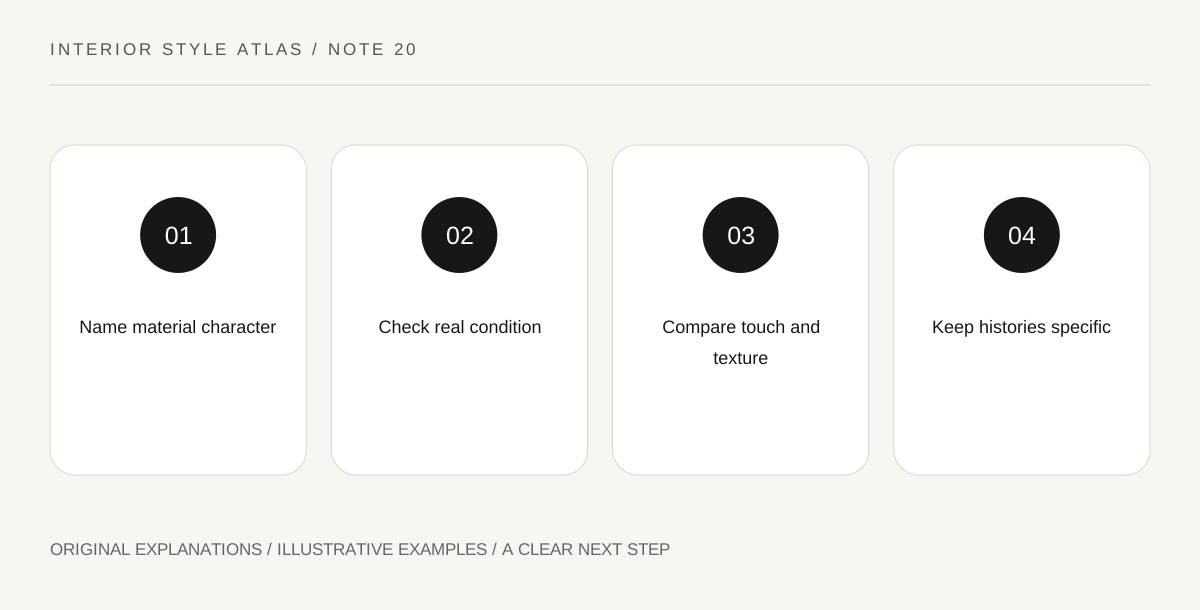
Original explanatory diagram. Read the full method and limitations below.
Choose the material quality you mean
Visible grain, a textured surface or an irregular handmade-looking form can create a rustic association. Each is a description, not proof of age, origin or process. A new object can have texture, and a smooth old object can still carry a rural history.
Name the quality you enjoy before seeking more objects. Perhaps you like the contrast between a substantial wooden form and a soft textile. That is a workable design idea. A vague wish for authenticity can lead to invented provenance or unnecessary distressing that adds damage rather than meaning.
Keep irregularity separate from instability
An uneven visual surface may be appealing, but furniture still needs to function as intended. Check condition and appropriate product information. Worn edges, loose parts or unknown finishes are not requirements for a rustic room, and this article does not assess the safety of old or reclaimed materials.
Do not remove finishes or repurpose structural or industrial objects without appropriate expertise. The appearance of age can conceal conditions that a photograph cannot reveal. For an ordinary decorative exercise, use suitable existing objects whose function and condition you understand.
Balance rough and smooth experiences
A textured object can become more noticeable beside a smooth surface. Softness may make a sitting area more comfortable while providing visual contrast. There is no need for every item to appear rough, heavy or unfinished; too much of one surface can obscure its particular character.
Touch matters where hands and bodies meet the room. A coarse-looking fabric may feel pleasant or unpleasant to you, and a smooth-looking one may have another texture entirely. Try the actual item rather than infer comfort from appearance or a fibre label. The desired mood should support the way the room is used.
Respect specific rural traditions
If you reference a particular region, maker or craft, research and name it accurately. Do not collapse distinct communities into a general countryside story. An object can remain personally appealing even when you do not know its origin; acknowledge that uncertainty rather than fill it with romance.
For an exercise, arrange one textured material, one plain form and one soft surface. Explain what each contributes and compare the result in ordinary use. Add a regional reference only if it is meaningful and documented. The room can express material warmth without becoming a staged account of a life you are not claiming to represent.
Illustrative honest rustic study
A reader keeps a sound wooden table with visible grain, a plain ceramic jug and a comfortable woven textile. They reject an unstable damaged stool that looked appealing in a photograph. The arrangement uses texture and simple form, while the unknown jug is described only by what is known. No artificial wear or invented farmhouse history is needed.
Practical checks
Optional checkboxes save only in this browser.
Questions that come up
Does rustic require distressed furniture?
No. Texture, form and visible material character can create the association without adding damage. Use suitable objects and keep genuine wear separate from claims about condition or authenticity.
Can rustic and contemporary objects coexist?
Yes. A plain contemporary piece can make a textured object more legible. Choose the relationship you enjoy rather than demand that everything imitate one imagined rural period or place.
References and scope
These sources support the factual background. Examples and exercises are original illustrative teaching material. References do not imply endorsement.
- Getty Museum: Principles of design — Balance, emphasis, repetition, proportion and visual rhythm in original room exercises.
- Getty Museum: Elements of art — Line, form, colour value, space and texture.
- V&A: Arts and Crafts introduction — Craft, production, material and the concept of a coordinated interior.
- V&A: Furniture collection — Furniture as diverse objects with construction, material and historical context.