Create a coastal mood through light and material relationships
Coastal is a broad contemporary decorating label rather than one historically unified style. Here it describes an original study of lighter values, open visual space and tactile surfaces. Decide which qualities you enjoy without assuming that a room needs shells, anchors or a fictional connection to a particular coast.
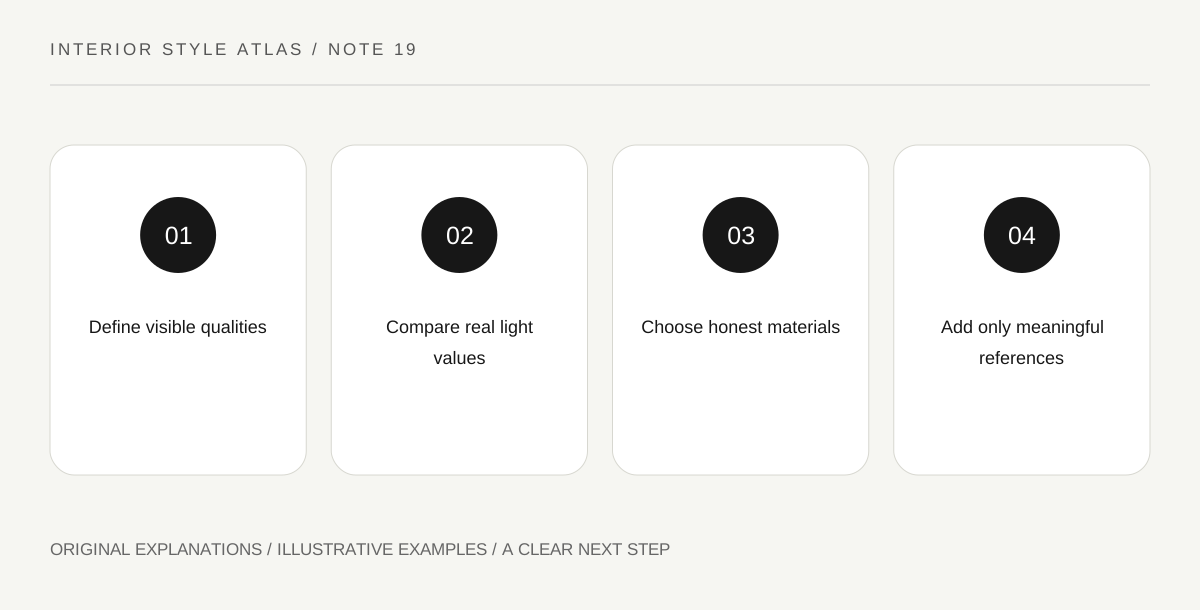
Original explanatory diagram. Read the full method and limitations below.
Define the mood in observable terms
A room may feel open because of lighter surfaces, visible space around objects or a quiet contrast. These observations are more useful than saying it looks coastal without explaining why. Different coasts and communities have very different built environments, so avoid treating one pale retail image as a universal regional truth.
Choose two qualities you want, such as light value and a woven surface. Keep the list specific enough to guide a decision. You can use those qualities inland or in a city apartment without claiming the room reproduces a local vernacular tradition you have not studied.
Compare light values in the actual room
White, cream and pale grey can look different beside fixed finishes and under changing light. A sample that appears neutral elsewhere may become noticeably warm or cool in your room. Use the actual surroundings rather than a colour name to judge the relationship.
For a decorative exercise, compare existing textiles or samples beside the furniture you keep. Avoid assuming all surfaces must become pale. A darker frame or object can make the lighter areas easier to read and prevent the composition from relying on an exact match that is difficult to maintain.
Use texture without inventing provenance
A woven basket, smooth ceramic and soft textile can create tactile contrast. Their materials and origins should be described accurately. Woven-looking does not establish a particular fibre, handmade process or coastal community. You can enjoy a surface without adding an unsupported story about how it was made.
Choose items that suit their actual purpose and care needs. A decorative basket is not automatically suitable for every load or environment. Keep function and condition separate from the desired mood, especially when using older or unfamiliar objects.
Limit literal theme objects to what you value
A shell or maritime image can be meaningful if you genuinely enjoy it. It is not required to establish the mood, and a collection should not be expanded simply to make the label obvious. Let personal significance decide whether a literal reference belongs.
Create one arrangement using only colour value and texture, then compare it with a version containing one meaningful coastal object. Ask what the object adds. The result can be a quiet material study or a more explicit personal reference, both described as contemporary interpretations rather than universal coastal design.
Illustrative inland coastal mood
A reader keeps a dark-framed chair and adds a pale textile, a smooth bowl and a useful woven container with known material information. They compare the arrangement with and without a small seaside drawing from a personal trip. The drawing remains for its meaning, while the mood comes mainly from light value and texture rather than a collection of nautical props.
Practical checks
Optional checkboxes save only in this browser.
Questions that come up
Must coastal rooms be blue and white?
No. That is one familiar contemporary palette, not a universal definition of coastal places or interiors. Choose the actual light, colour and material relationships you want.
Can I use this mood without living near the sea?
Yes. Describe it as a personal contemporary interpretation. You do not need to claim a regional history or add literal nautical objects to justify enjoying lighter values and tactile surfaces.
References and scope
These sources support the factual background. Examples and exercises are original illustrative teaching material. References do not imply endorsement.
- Getty Museum: Principles of design — Balance, emphasis, repetition, proportion and visual rhythm in original room exercises.
- Getty Museum: Elements of art — Line, form, colour value, space and texture.
- V&A: Furniture collection — Furniture as diverse objects with construction, material and historical context.